
Áine: The Goddess of Cnoc Áine and Midsummer

Áine: The Goddess of Cnoc Áine and Midsummer
Áine is a supernatural woman in the Irish tradition, with stories which link her hill in County Limerick to kingship, fertility, the Otherworld and the midsummer fires which were once lit on her hill..

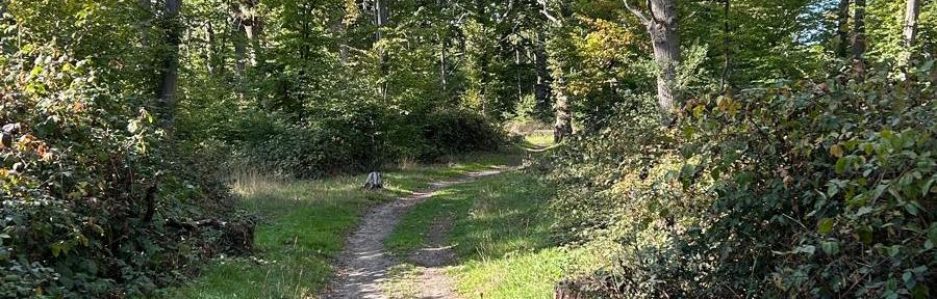
The slopes of Cnoc Áine (Knockainey Hill), County Limerick, traditionally associated with the goddess Áine and the midsummer torch processions held in her honour.
Photograph: Dylan Moore / Geograph, licensed under CC BY-SA 2.0. Cropped to 16:9.
Áine: The Goddess of Cnoc Áine and Midsummer
Áine is a supernatural woman in the Irish tradition, with stories which link her hill in County Limerick to kingship, fertility, the Otherworld and the midsummer fires which were once lit on her hill.
\\\\\ specific place. Cnoc Áine (Knockainey Hill) is a hill near the village of Knockainey in County Limerick. The hill is named after her, and local traditions speak of her meeting with men of the world, her power over the land, and the celebrations that took place there on the nights of midsummer.
Áine is present in both medieval literature and the folklore collected centuries later. The various sources tell us different things about her. She is a being of the sídhe world, of royal lineage, and of the land’s well-being. In some accounts, she is very kind to those who give her respect and honour; in others, she is quite vindictive if she is treated unkindly. Her association with Midsummer is particularly well attested in 19th-century folklore, where local people still remembered processions with burning torches going across the hill.
Áine, Cnoc Áine and the Otherworld
Cnoc Áine lies in the ancient territory of Eóganacht Áine (one of the Eóganachta territories), and the hill’s name is a testament to Áine’s connection with that area. Local traditions are very much in keeping with the idea of her as a supernatural being of the land.
In Irish folklore, the sídhe are the beings of the ancient mounds, hills and places which are understood to be gateways to another world. Áine is part of that tradition, though her stories also place her among the Túatha Dé Danann. In later accounts, she is sometimes described as a fairy queen (again, a term produced by the language of the folklore collectors rather than one that existed in the earliest literature).
The name Áine is strongly associated with brightness/radiance, which has led to her later reputation as a goddess of summer and, hence, the sun. She is certainly associated with the midsummer fires, though the evidence doesn’t really support the view that she was in fact a sun goddess in general. Her identity is best established through the stories and the traditions connected with Cnoc Áine.
Áine: The Goddess of Cnoc Áine and Midsummer
Áine is an Irish supernatural woman whose stories are all about the connection between the landscape of County Limerick and kingship, fertility, the Otherworld and the midsummer fires which used to be lit on her hill.
Of the various supernatural figures associated with the Irish landscape, Áine has by far the strongest connection to a particular spot. Cnoc Áine (Knockainey Hill) is a hill near the village of Knockainey in County Limerick. The hill is named after her, and local traditions tell of her meetings with men of the world, her power over the land, and the festivities that take place there on the night of midsummer.
Áine is a figure in the medieval literary tradition and in the folklore collected many centuries later. The various sources give us a range of aspects of her character. She is a figure of the sídhe world, of royal blood, and of the country’s fertility. She can help those in her circle, but she can also be very fierce if she is treated badly. Her link with midsummer is perhaps the most well-documented in the folklore of the 19th century, when the local people still remembered the processions of torches being carried across her hill.
Áine, Cnoc Áine and the Otherworld
Cnoc Áine is in the ancient territory of Eóganacht Áine (one of the Eóganacht territories). The hill’s name clearly indicates Áine’s association with the area, and surrounding traditions place her among the supernatural beings of Ireland.
In Irish folklore, the sídhe are the beings of the mounds, the hills, the places which are understood to be entrances to another world. Áine is part of that tradition, though she is also linked to the Túatha Dé Danann. The later collectors of the stories will sometimes refer to her as a fairy queen, which is of course just the language of the local folklore rather than a title which was established in the earliest literature.
Her name is often taken to mean brightness or radiance, and her link with midsummer has led to her being described as a sun goddess. The evidence we have is much more specific: she is clearly linked to a particular hill, the surrounding country, and the folk traditions of Munster. That is probably the most useful way of understanding her.
Áine and the Kings of Munster
One of Áine’s better-known stories is that of Ailill Aulom, the legendary king of Munster whose name appears in early Irish genealogies and narrative traditions. In the stories which explain his relationship with Áine, Ailill tries to force himself on her, and she resists. She bites off his ear, and he is left with a permanently disfigured ear.
The injury is of course of considerable significance in the Irish conception of kingship. The king was expected to be whole in body, and Ailill’s missing ear renders him unsuitable for kingship in the ideal of the unscathed ruler. The tale therefore links Áine’s resistance to the question of the king’s legitimacy. The consequences of her actions go well beyond the encounter itself.
The link between Áine and Ailill, as well as the Eóganachta, also ties her to the ancestry of the ruling families of Munster. The genealogy we’re talking about explains relationships between mortal rulers through the ruler’s interaction with a supernatural woman. Áine’s role in these accounts is particularly potent in that she is the one who has the power over the man who seeks to take her, and the lasting physical damage he suffers is a tangible sign of his behaviour.
Áine and the Enchanted Earl of Desmond
Another set of stories concerns Áine and the Fitzgeralds, especially the legendary Earl of Desmond (Gearóid Iarla or Earl Gerald). These stories were recorded in the 19th century and belong to a later body of folklore than the medieval stories of the early kings of Munster.
In a version recorded by David Fitzgerald, the Earl of Desmond comes upon Áine by a river; she is bathing and combing her hair. He takes her cloak and thereby gains power over her. Áine tells him that he could never have had her against her will without taking the cloak. She then gives him a son, Gerald, and warns the Earl that he must never be surprised by anything the boy might do.
Gerald grows into a very able young man. At a gathering in his father’s castle, a woman astonishes the company by jumping over the table. When Gerald is challenged to do better, he jumps into a bottle and comes out again. His father is absolutely amazed and completely forgets Áine’s warning. Gerald at once reminds him of the condition and is off the stage as it were (Fitzgerald, 1880).
The story goes on with Gerald’s supernatural existence and his connection to the land around Lough Gur. He is an enchanted figure in local tradition who may return under certain conditions. Áine’s role is critical: she is the supernatural mother whose warning determines the nature of her son’s existence.
The episode also illustrates the evolution of Áine’s traditions. Her link with the Fitzgeralds situates her firmly within the history and folklore of medieval and later Munster, while the stolen cloak and the strange child fit into a much wider tradition of human encounters with supernatural women.
Midsummer Fires on Cnoc Áine
Áine’s most enduring link with seasonal celebration is via the midsummer customs of Knockainey. David Fitzgerald recorded the local traditions of the time, when people gathered on the hill on Midsummer Eve with torches (bundles of straw or hay bound to a stick) and carried them all round the hill before going into the fields.
There they would wave the flames over the crops and the cattle in the hope of securing prosperity and protection for the year ahead. The ceremony linked the hill to the life of the farm. The success of the harvest and the health of the stock were, of course, the most immediate concerns, and in this context Áine took on a distinct supernatural dimension in local tradition (Fitzgerald, 1880).
One version of the story is that the normal procession was dropped one year following a death in the locality. People nevertheless reportedly saw a very large procession of lights going round the hill, with Áine at the head. The tale is that the hill folk continued to observe the celebration, even when the human folk had ceased to do so.
The account is good evidence of the beliefs and customs as they were remembered in 19th-century County Limerick. It does not establish an unbroken ritual tradition from pre-Christian Ireland. The practice as recorded and the explanation given with it are the folklore of a particular community at a particular time.
Áine in the Folklore of Lough Gur
The country round Lough Gur has further traditions relating to Áine and the other inhabitants of the region. Evans-Wentz’s early 20th-century accounts describe Áine as one of the Aos Sí and link her with Knockainey, whilst a different female spirit, Fennel or Finnen, is associated with the neighbouring hill.
These traditions see Áine as part of a landscape full of beings who could in fact influence human affairs. Hills, lakes and ancient earthworks were all regarded as places where you might encounter the Otherworld. The stories of the enchanted Earl of Desmond, the supernatural processions, and the inhabitants of Lough Gur all fall within this same regional tradition (Evans). The local character of these accounts is absolutely vital. Áine’s identity was maintained through place names, stories passed down from family to family in neighbouring areas, and memories of seasonal customs. It’s not a systematic theology or a set of fixed divine duties. It’s simply the record of a supernatural woman who was very much a part of the land and the lives of the people who lived on it.o inhabited it.
Áine in Contemporary Paganism:
Within modern Paganism, Áine is a goddess of midsummer, fertility, prosperity, and the natural world. The connection to Cnoc Áine and the documented torch processions provides a solid basis for the modern-day association of her with midsummer.l Some practitioners do pay homage to Áine at the summer solstice in the form of outdoor ceremonies, seasonal offerings or acts of care for the land. These are modern religious practices rather than any complete reconstruction of an ancient cult. The 19th-century accounts describe communal torch processions and their agricultural function, but they contain no detail about the nature of any prayers, offerings, or devotional rites and ceremonies.
The stories also invite reflection that goes well beyond the mere business of seasonal celebration. Áine’s encounter with Ailill is all about the consequences of infringing upon a supernatural woman’s autonomy. The story of the Earl of Desmond is about possession, obligation, and a warning that must be heeded. Her midsummer customs are inextricably linked to the health of the fields, the health of the livestock and the health of the community at large.
For modern practitioners, engaging with the traditions of Cnoc Áine means studying its history, the folklore that survives, and the care of the landscape.
The Enduring Presence of Áine
Áine’s place in the Irish tradition has been maintained through an odd mixture of medieval tale, local folklore, and the memory of seasonal customs. Her dealings with kings and nobility link her to the land’s supernatural authority, and the midsummer celebrations at Knockainey show how her name remained part of the agricultural and community life of County Limerick.
The hill itself links the various traditions. For generations, the Cnoc Áine has been the subject of story and folklore as a supernatural woman whose actions could directly affect the fortunes of kings and rulers, families, and the general prosperity of the country. The surviving evidence comes from different periods, but the fact that the name and the stories have persisted so strongly clearly indicates the degree to which myth and landscape can become intertwined.
Áine is particularly an outlier among the supernatural women of Irish tradition, in that her stories have such a clear geographical setting. Cnoc Áine, Lough Gur, and the surrounding area are central to understanding the traditions through which her memory has endured.
References and Further Reading
Evans-Wentz, W. Y. (1911) The Fairy-Faith in Celtic Countries. Oxford: Oxford University Press. Chapter II, ‘Taking of Evidence in Ireland’, including ‘The Fairy Goddesses, Aine and Fennel’. Available at: https://www.gutenberg.org/ebooks/34853
Fitzgerald, D. (1880) ‘Popular Tales of Ireland’, Revue Celtique, 4, pp. 171–200. Available at: https://dspace.bcu-iasi.ro/bitstream/handle/123456789/116314/Fitzgerald%2C%2BDavid%2C%2BPopular%2Btales%2Bof%2BIreland%2C%2BRevue%2Bceltique%2C%2BTom.4%2C%2B1879-1880%2C%2Bp.171-200.pdf?sequence=1
Rolleston, T. W. (1911) Myths and Legends of the Celtic Race. London: Constable and Company. Chapter III, ‘The Irish Invasion Myths’. Available at: https://www.gutenberg.org/ebooks/34081
Explore this tradition
Gods, goddesses and divine figures of Irish mythology.
Discover the wider world of Pagan traditions.