
Exploring Pagan Pantheons and Pathways

Exploring Pagan Pantheons and Pathways
An introduction to Pagan religious traditions, their histories and their place in contemporary spiritual practice.

The Sacred Spring at the Roman Baths, Bath, associated with the worship of Sulis Minerva. Photograph: Andrew Dunn, CC BY-SA 2.0.
Someone visiting the Roman baths at Bath had their bathing cloak stolen. We know this because they left a message for the goddess Sulis Minerva, asking her to punish whoever had taken it. They scratched the words onto a thin sheet of metal and placed it in the sacred spring. Nearly two thousand years later, the tablet was recovered, along with many others containing similar appeals. People complained about missing money, stolen clothing and thieves whose names they did not know. Some asked the goddess to make the culprit suffer until the stolen property was returned.
These tablets show how religion worked in Roman Britain. People visited the sanctuary with problems they could not resolve themselves and asked the goddess to intervene. Alongside the grand temples and elaborate ceremonies of the ancient world, people dealt with frustrations much like those anyone might experience today.
Today, many of these ancient religions inspire modern Pagan traditions. Some practitioners seek to revive historical customs, while others draw inspiration from mythology, folklore and the natural world. The ways these traditions are understood and practised have changed considerably, but their surviving stories, sacred places and archaeological discoveries continue to provide valuable material for study.
Understanding Paganism and Pantheons
The word Pagan was used by Christians in late antiquity to describe people who continued to follow traditional religions. It never referred to a single ancient faith. Someone who worshipped Athena in Greece would have followed different customs than a devotee of Isis in Egypt or Thor in Scandinavia. Modern Paganism covers a wide range of spiritual and religious traditions inspired by the pre-Christian past, including newer movements such as Wicca and modern Druidry. Some place considerable importance on historical research, while others take a more personal approach to religious practice.
The word pantheon means a collection of gods and goddesses associated with a particular culture. However, the familiar lists found in mythology books can give a misleading impression of how ancient religion worked. People did not necessarily worship every god in their pantheon, and the importance of individual deities often depended on where someone lived. A goddess might be central to one city’s religious life but receive relatively little attention elsewhere. Understanding these traditions therefore involves looking beyond the stories to the people, places and customs associated with the gods.
The Gods of Greece and Rome
Homer’s and Hesiod’s poems tell us a great deal about the Greek gods, but less about what it was like to worship them. In Athens, the goddess Athena was honoured each year at the Panathenaia, with a larger celebration held every four years. One central tradition was presenting a new robe, or peplos, woven for the goddess. It was carried through the streets in a procession to the Acropolis, where Athena’s ancient cult statue stood. The robe was the work of Athenian women, and its presentation had been carefully prepared long before the festival began. Athletes competed and musicians performed as well, but the procession and the offering of the robe remained at the heart of the religious celebrations (Cartwright, 2018).
Roman religion had its own customs, although many Roman gods became closely associated with Greek deities. Jupiter, Juno and Minerva received public honours, while families made offerings to household gods such as the Lares and Penates. Religious ceremonies shaped public responsibilities and family life, with specific days set aside for festivals and observances. As Roman influence spread, the Romans also encountered gods already worshipped in the lands they conquered. At Bath, the local British goddess Sulis became known as Sulis Minerva, combining her name with that of the Roman goddess (Mark, 2019).
Archaeologists have recovered around 130 inscribed tablets from the sacred spring at Bath, many of them about stolen belongings, including clothing and money. The writers asked the goddess to identify or punish whoever had taken their property. Dating mainly from the second to fourth centuries CE, these tablets preserve the personal concerns of worshippers who believed Sulis Minerva could help them obtain justice. They also show how local religious traditions continued under Roman rule, sometimes taking on new names and forms of worship (Roman Baths, n.d.).
Irish Gods and the Tuatha Dé Danann
Much of what survives of Irish mythology comes from medieval manuscripts written after Christianity had become established in Ireland. These texts preserve stories about the Tuatha Dé Danann, a supernatural people whose members include the Dagda, Lugh, Brigid, Nuada and the Mórrígan. One of the best-known narratives is Cath Maige Tuired, or The Second Battle of Mag Tuired, which tells of their conflict with the Fomorians. Some of its most memorable moments, however, take place before the fighting begins.
When Lugh arrives at Tara, the doorkeeper refuses to admit him unless he possesses a skill no one inside already has. Lugh offers his services as a carpenter, smith, warrior, harpist, and poet, but is told each position is already filled. Eventually, he asks whether anyone at court possesses all these skills. The question earns him an audience, and he demonstrates his abilities before being welcomed among the Tuatha Dé Danann. The Mórrígan also plays an important part in the story. Before the battle, she meets the Dagda beside the River Unshin, where they have a sexual encounter. She promises to act against the Fomorians and later, following their defeat, proclaims the victory to the rivers, mountains and other features of the Irish landscape (Cath Maige Tuired, 2003).
These stories provide much of what is known about figures who feature in modern Irish Paganism, although the surviving manuscripts tell us far more about their mythology than about how they were worshipped before Christianity. For someone wishing to honour the Mórrígan today, Cath Maige Tuired offers material for study and reflection, but it gives no instructions for making offerings or conducting rituals. Modern devotional practices must therefore draw upon interpretation and contemporary religious experience.
Ancient Britain and Its Sacred Places
Archaeology provides much of the evidence for religious activity in prehistoric Britain. Stone circles, burial monuments and objects deliberately deposited in rivers suggest that particular places were important, although their exact religious meaning is often difficult to establish. At Lydney Park in Gloucestershire, the remains of a Roman-period temple stand on a wooded hillside overlooking the River Severn. The sanctuary was dedicated to Nodens, a god whose name survives in several inscriptions. Among the discoveries was an inscribed appeal concerning a stolen ring. Its owner asked Nodens to withhold good health from the thief until the ring was returned. The sanctuary provides clear evidence that Nodens was worshipped in western Britain, but very little is known about his mythology or the ceremonies performed in his honour.
The ancient Druids present a different problem. In Book Six of The Gallic War, Julius Caesar describes them as religious specialists who performed sacrifices, taught, and settled disputes. He claims that their training could last twenty years and that they memorised large quantities of verse rather than writing down their teachings. Caesar also believed that Druidic learning had originated in Britain, where people from Gaul travelled to study. His account remains valuable, though he wrote it during Rome’s conquest of Gaul and describes the Druids from an outsider’s perspective (Caesar, The Gallic War, 6.13–14).
Norse and Germanic Traditions
Many familiar Norse myths survive in medieval Icelandic writings, particularly the Poetic Edda and Snorri Sturluson’s Prose Edda. These texts tell stories about Odin, Thor, Freyja, Freyr, and other gods, though they were written down after Christianity had reached Scandinavia. Thor’s hammer, Mjölnir, features in a particularly entertaining story about how it was stolen. In the poem Þrymskviða, the giant Þrymr takes the hammer and refuses to return it unless he can marry the goddess Freyja. Thor is furious, but the gods devise a plan. He will dress as Freyja and pretend to be the bride, with Loki accompanying him. At the wedding feast, the hammer is brought forward to bless the marriage. Thor immediately grabs it and kills Þrymr and the other giants.
The hammer was important beyond the stories, too. Archaeologists have found small Mjölnir-shaped pendants at Viking Age sites across Scandinavia and elsewhere. Although their exact meaning to individual wearers is uncertain, they show that Thor’s hammer had a place in everyday life as well as mythology (Samuels, 2025). These surviving stories and discoveries provide the starting point for modern Heathenry, a Pagan tradition inspired by Norse and Germanic religions. Offerings to the gods, honouring ancestors and seasonal gatherings are common features of contemporary practice, with some customs reconstructed from historical evidence and others developed by modern worshippers.
The Religious World of Ancient Egypt
The ancient Egyptians worshipped many gods, and their status varied as Egyptian religion evolved over thousands of years. The most well-known of these were Ra, the sun god; Isis, who was linked with protection and magic; and Osiris, who was in charge of the dead. Much of what we know about how they worshipped the gods comes from the temples that have survived. The Temple of Dendur, which is currently located at the Metropolitan Museum of Art in New York, was constructed during the Roman era. Carvings on the temple’s walls depict the emperor Augustus wearing the attire of an Egyptian pharaoh and making offerings to the gods. Augustus never carried out these ceremonies himself. The carvings show the religious duties Augustus fulfilled as ruler, while the temple’s priests cared for the temple. Every day the priests attended to the gods’ sacred images and presented offerings on the king’s behalf. The rituals followed traditions which had influenced Egyptian religious life for centuries (Stünkel, 2018).
A central idea in Egyptian religion was ma’at, which concerned truth, justice, and the proper order of things. It influenced how people were expected to behave, how rulers governed and what happened after death. Egyptians believed that the heart of the deceased would be weighed against the feather of Ma’at to judge whether they had lived a worthy life. Today, followers of Kemetic Paganism, a modern religion inspired by ancient Egyptian beliefs, often regard ma’at as an important guide to everyday life. Some also seek to revive ancient forms of worship using surviving texts and archaeological evidence.
Modern Paganism and its Roots
The ancient religions described in this article still inspire people today, though modern Paganism has its own history. Those interested in reviving the worship of Greek, Roman or Norse gods often begin with the surviving texts and archaeological evidence. They may use ancient prayers or follow religious calendars where enough information survives. But the records are rarely complete, and even the most historically minded practitioners must decide how their religion will work today.
Modern Druidry grew from a rather different background. During the eighteenth century, antiquarians and writers became fascinated by the Druids of ancient Britain, despite knowing relatively little about their actual beliefs. Their ideas helped inspire the Druid revival movements that followed. Over time, Druidry developed into a modern spiritual tradition in which the natural world, poetry and seasonal celebrations have become particularly important. Wicca has a more recent history. Gerald Gardner brought it to public attention in the 1950s, drawing on ceremonial magic, folklore, and other influences to establish a modern form of witchcraft with its own rituals and initiatory traditions. Both Druidry and Wicca have continued to develop, and neither should be mistaken for an unchanged survival of ancient religion.
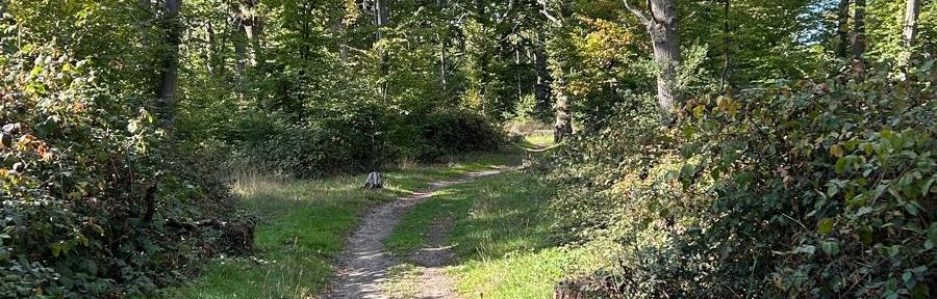
Not everyone practising Paganism today follows a particular historical tradition. Some develop their own practices, perhaps honouring gods from different pantheons or combining customs they have encountered through study and personal experience. Knowing the origins of these customs can help them distinguish which have ancient roots and which are more recent. The landscape can also play an important part in religious practice. An ancient sanctuary may attract visitors because of its history, while a familiar stretch of woodland or a nearby river may become a place of personal devotion. Such places need no recorded history of worship to hold religious meaning for those who visit them.
Seasonal festivals also play a considerable part in modern Paganism. Many practitioners celebrate the Wheel of the Year, which combines the solstices and equinoxes with Samhain, Imbolc, Beltane and Lughnasadh. Although several of these festivals have ancient or medieval roots, the familiar eightfold calendar developed during the twentieth century. No single religious calendar was shared by all ancient Pagan cultures (Hutton, 2008). For modern practitioners, however, it provides a way to mark seasonal changes and maintain a regular pattern of celebration.
History, Mythology and Personal Experience
We still know little about how people worshipped the ancient gods. Take the Mórrígan, for example. Medieval Irish texts describe her involvement in battles, her encounters with other figures, and her proclamation of victory after the defeat of the Fomorians. Yet they tell us almost nothing about the prayers or offerings that might once have been made to her. The same difficulty arises with archaeological discoveries. A Viking Age pendant shaped as Thor’s hammer shows someone chose to wear his symbol, but we cannot know exactly what it meant to that person. Even where substantial evidence survives, as it does for Greek and Egyptian religion, it cannot answer every question about an individual’s beliefs or experiences.
Modern Paganism also includes personal religious experience. Prayer, offerings, ritual and relationships with particular deities or places may be deeply meaningful to practitioners, even when no ancient precedent survives. Historical research cannot determine the value of someone’s spiritual experience, but it can help establish which beliefs and practices are supported by surviving evidence and which belong to modern interpretation.
For anyone beginning to explore Paganism, reading the original myths alongside reliable historical research is a useful starting point. Museum collections, archaeological discoveries and translations of ancient texts can reveal details that are easily missed in popular accounts of the gods. The most interesting discoveries are often small: a stolen ring at Lydney, a complaint left in the spring at Bath, or a hammer pendant worn by someone in Viking Age Scandinavia. Each brings the people behind these religions a little closer, showing how their beliefs found a place in ordinary life.
References
Cartwright, M. (2018) ‘Ancient Greek Religion’, World History Encyclopedia, 13 March. Available at: https://www.worldhistory.org/Greek_Religion/
Cath Maige Tuired: The Second Battle of Mag Tuired (2003) Translated by E.A. Gray. CELT: Corpus of Electronic Texts, University College Cork. Available at: https://celt.ucc.ie/document/T300010/
Hutton, R. (2008) ‘Modern Pagan Festivals: A Study in the Nature of Tradition’, Folklore, 119(3), pp. 251–273. Available at: https://doi.org/10.1080/00155870802352178
Mark, J.J. (2019) ‘Roman Household Spirits: Manes, Panes and Lares’, World History Encyclopedia, 28 October. Available at: https://www.worldhistory.org/article/34/roman-household-spirits-manes-panes-and-lares/
Roman Baths (n.d.) ‘Roman Curse Tablets’. Bath & North East Somerset Council. Available at: https://www.romanbaths.co.uk/roman-curse-tablets
Samuels, J. (2025) ‘The Meanings of Mjölnir: Thor’s Hammer & More’, World History Encyclopedia, 11 September. Available at: https://www.worldhistory.org/article/2785/the-meanings-of-mjolnir/
Stünkel, I. (2018, revised 2025) ‘The Temple’s Cult and Decoration’, The Metropolitan Museum of Art, 2 November. Available at: https://www.metmuseum.org/essays/temple-of-dendur-cult-and-decoration
Caesar, J. (1917) The Gallic War. Translated by H.J. Edwards. Cambridge, MA: Harvard University Press. Book 6, sections 13–14. Available at: https://www.perseus.tufts.edu/hopper/text?doc=Caes.+Gal.+6.13