
The Autumn Equinox

Balance, Harvest and the Turning Toward Darkness
There comes a moment each autumn when day and night stand close to balance. The long light of summer is behind us, the evenings are drawing in, and the landscape begins its slow transformation towards winter. This is the autumn equinox, one of the two equinoxes that occur each year and, for many modern Pagans, one of the eight festivals of the Wheel of the Year.
It is often described simply as a festival of balance, yet there is more to the autumn equinox than equal day and night. It stands at a threshold between summer and winter, growth and decline, gathering and release. It is a time of harvest, gratitude and preparation, but also a reminder that the darker half of the year is approaching.
What is the Autumn Equinox?
The autumn equinox is an astronomical event that usually falls around 22 or 23 September in the Northern Hemisphere. At the equinox, the Sun crosses the celestial equator travelling southwards. Neither hemisphere is tilted significantly towards the Sun, and day and night are approximately equal in length.
The word equinox comes from the Latin aequus, meaning “equal”, and nox, meaning “night”. Perfect equality between daylight and darkness does not necessarily occur on the equinox itself. Atmospheric refraction and the way sunrise and sunset are measured mean that the date on which day and night are closest to twelve hours each varies according to location.
Nevertheless, the symbolism is powerful. For a brief moment, light and darkness appear to stand in balance, and then the balance shifts. From this point onwards, in the Northern Hemisphere, darkness increasingly overtakes the light until the winter solstice.
A Festival of the Harvest
By autumn, the year’s work in the fields was coming to its most important point. Grain needed to be cut and brought in before wet weather spoiled it, apples and other fruits were gathered, and whatever could be stored or preserved was put aside for the months ahead. The harvest was not an abstract celebration of abundance: it was food in the barn, grain in the store and provisions for winter.
When the work was finally finished, there was good reason to celebrate. Harvest suppers and communal feasts marked the end of weeks of hard labour, bringing together the people who had helped bring in the crop. These celebrations were tied to the completion of the local harvest rather than to the autumn equinox itself, and their timing varied according to the crop, the weather and the place
Across Britain and Ireland there developed numerous harvest customs, celebrations and communal meals. The precise traditions varied considerably by place and period, but feasting, thanksgiving and the gathering of the final crops were widespread features of rural life. The familiar idea of a Harvest Home, for example, developed around the completion of the harvest rather than around a fixed astronomical date.
This distinction is important because there is little evidence that the autumn equinox itself was universally celebrated by the ancient Celtic or pre-Christian peoples of Britain and Ireland as a specific religious festival. The modern Pagan autumn equinox draws inspiration from older seasonal and harvest traditions, but the festival as it is commonly celebrated today is largely a modern development.
That does not make it meaningless. Traditions do not need to be thousands of years old to carry spiritual significance. What matters is understanding where they come from rather than creating an imagined history for them.
Is the Autumn Equinox Really Called Mabon?
Today the autumn equinox is frequently called Mabon, particularly within Wicca and some forms of modern Paganism. The name, however, is comparatively recent.
Mabon ap Modron is a figure from medieval Welsh literature. His name essentially means “Mabon, son of Modron”, and he appears most famously in the tale Culhwch and Olwen, where he is described as having been taken from his mother when only three nights old. There is no surviving evidence that an ancient Welsh autumn equinox festival was called Mabon.
The use of Mabon as the name of the autumn equinox festival dates to the twentieth century, when American Pagan writer Aidan Kelly applied names to several points of the developing modern Wheel of the Year. Some Pagans happily use Mabon today as the established name of the festival, while others prefer Autumn Equinox, Harvest Home, Second Harvest, or simply the Equinox. All can have a place within contemporary practice, provided that modern tradition is distinguished from historical evidence.
The Meaning of Balance
Balance is probably the most familiar spiritual theme associated with the equinox, but balance does not necessarily mean that everything in our lives should be perfectly divided into equal halves. Nature itself does not remain balanced. The equinox is a crossing point: light and darkness meet, and then darkness continues to grow.
Perhaps this offers a more useful spiritual understanding of balance. Balance can be something dynamic rather than static: the ability to remain centred while circumstances change around us. The autumn equinox invites us to consider where our energy is going, what we may have neglected, what needs to be brought back into relationship and what changes we need to accept.
Balance is not about freezing life at the midpoint. It is about learning how to move through change without losing our centre.
Gathering the Harvest
The language of harvest can also be turned inward. By September, much of the year has already passed. Plans made during winter and spring have either grown, changed or disappeared altogether. The equinox offers an opportunity to look at what those months have produced.
Not every harvest is something dramatic. Perhaps you learned something difficult, a relationship deepened, you completed a piece of work, changed a habit, survived a difficult period or finally understood something about yourself. These things are harvests too. We can ask ourselves what we have grown during the year, but also what we have learned from the things that failed to grow.
Harvest is not simply celebration; it is also assessment. The farmer does not only admire the grain. The harvest reveals what flourished, what struggled and what may need to be done differently when the cycle begins again.
Gratitude Without Pretending Everything Is Good
Gratitude is another common theme of autumn equinox celebrations, but meaningful gratitude need not require us to pretend that everything in life is wonderful. We can be grateful while acknowledging grief, difficulty, injustice and uncertainty.
Indeed, traditional harvest celebrations existed precisely because people understood uncertainty. Food, weather and survival could never be taken entirely for granted. Gratitude can therefore be less about forced positivity and more about recognition. It asks us to notice what sustains us, who has helped us, what the land provides and what we have received that we did not create entirely by ourselves.
Seen in this way, gratitude becomes an act of relationship rather than simply an expression of happiness.
The Turning Towards Darkness
After the autumn equinox, the nights lengthen rapidly. Modern life allows us to resist this change. Electric light, central heating and year-round food supplies can make one month resemble another, yet our bodies still inhabit a seasonal world. Trees lose their leaves, temperatures fall, birds migrate, plants die back or become dormant, and the quality of the light changes.
The darker months need not be regarded as something negative. Darkness can represent rest, incubation, mystery and inward attention. Seeds wait beneath the soil and roots remain alive beneath apparently empty ground. Many animals withdraw or reduce their activity. The natural world reminds us that apparent stillness is not the same as absence.
The autumn equinox can therefore mark the beginning of a gradual inward movement, a season for reflection, study, storytelling, divination, craft, meditation and deeper attention to the inner life. There is wisdom in knowing when to grow, but there is also wisdom in knowing when to stop.
Letting Go
Autumn provides one of nature’s clearest lessons in release. Leaves change colour and fall, annual plants die back and fields are cleared. What was necessary during summer is no longer required.
For us, this can become an invitation to consider what we continue to carry simply because it has become familiar. It might be a habit, an obligation, an expectation, a resentment, a project whose time has passed or even a version of ourselves that no longer quite fits.
By autumn, the trees are already doing what the season demands. Leaves that have spent months feeding the tree begin to change colour, loosen and fall. There is something worth noticing in that. We also carry things beyond their season: habits we no longer need, commitments that have become burdens, old expectations, even ideas about who we ought to be. The equinox is a good time to look at what we are carrying and ask whether it still belongs with us as we move into the darker months.
Celebrating the Autumn Equinox
An equinox observance does not need to be elaborate. An altar might be decorated with seasonal objects such as fallen leaves, apples, acorns, berries, grain, nuts or autumn flowers. A light and a dark candle can represent the meeting of day and night. A meal made from seasonal produce can become an opportunity to recognise the land, people and processes that brought the food to the table.
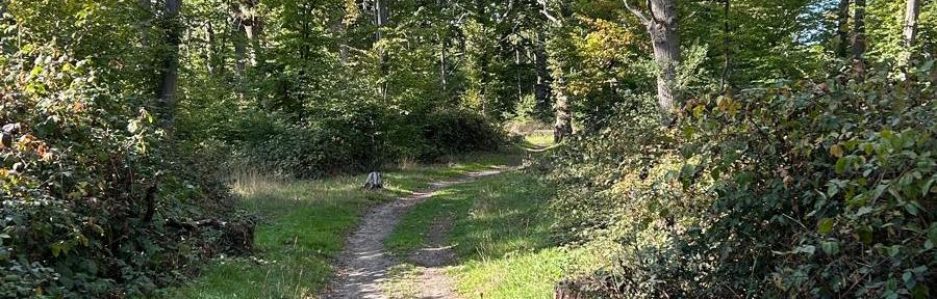
Walking outdoors can itself become a ritual. Notice the temperature, the angle of the Sun, the changing leaves, fruits and seeds, migrating birds and the first unmistakable signs that summer is ending. Rather than treating nature as a backdrop for a festival, we can allow the changes actually happening around us to shape our observance.
Reflection has a natural place here too. Go outside around sunset and spend a little time noticing what is actually happening. The light disappears earlier now, the air has changed, and the warmth of summer is beginning to feel like something remembered rather than expected. Take that moment to think about your own year. What has actually come to fruition? What never became what you expected? What are you still dragging along simply because you have not put it down? You do not need an elaborate ritual to mark the equinox. A candle, a few minutes outside and an honest look at where you find yourself as the season turns can be enough.
There is no requirement to recreate an imagined ancient ceremony. Sometimes simply standing outside and consciously witnessing the turning season is ritual enough.
Standing at the Threshold
The autumn equinox occupies a curious place in the year. It celebrates abundance while reminding us that abundance does not last. It speaks of balance while marking the moment that balance begins to tip. It asks us to gather what we need while also teaching us to release what has completed its purpose.
Perhaps that is why the equinox remains such a powerful point on the modern Pagan calendar. It does not ask us to choose between light and darkness. Instead, for one brief threshold moment, it asks us to recognise both: to give thanks for what has grown, to learn from what has not, and to decide what is worth carrying forward.
Then, as the nights lengthen and the leaves begin to fall, we turn with the season towards the darkness of the year.